
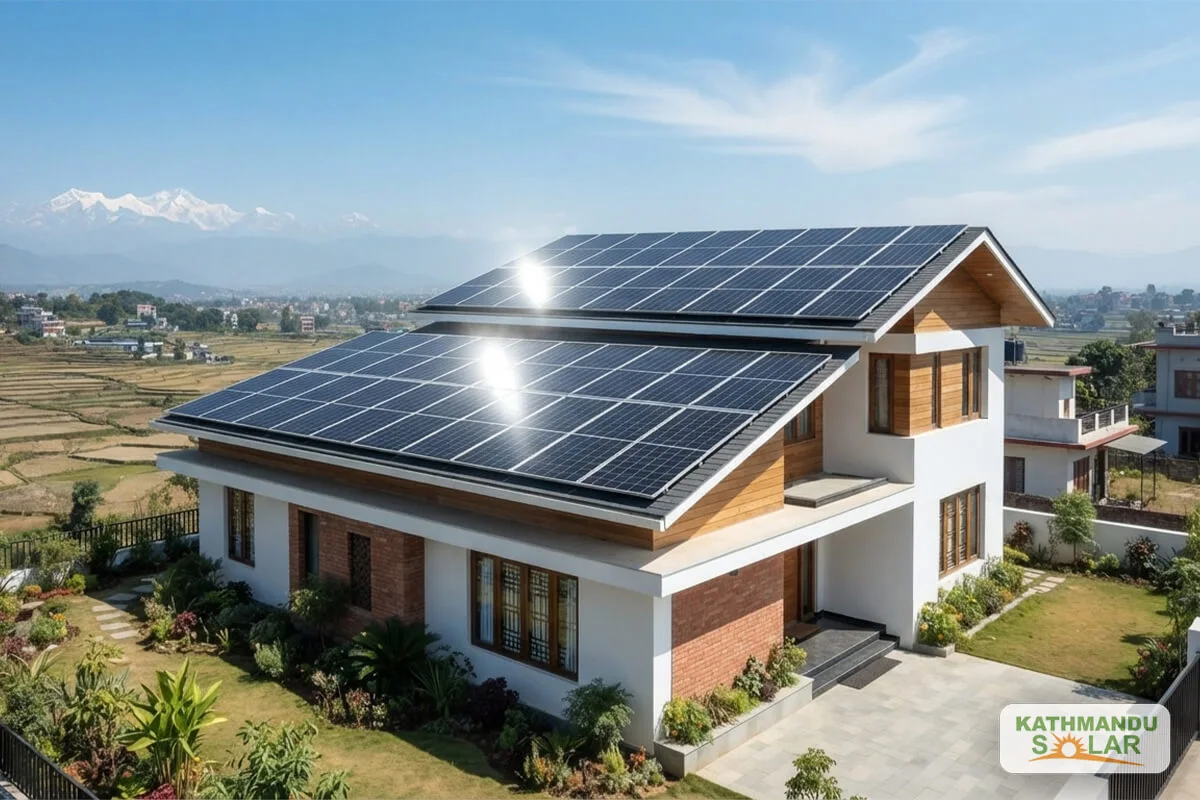
Nepal is blessed with abundant sunshine. With more than 300 sunny days in many parts of the country and average solar radiation of 4.5–5.5 kWh/m²/day, solar energy has become one of the most practical and profitable energy solutions for homes, businesses, schools, and industries.
In 2026, solar panel installation is no longer just an alternative – it is a smart financial and environmental decision. Rising electricity tariffs, the desire for energy independence, and improved technology have made rooftop solar systems more attractive than ever for Nepali customers.
This comprehensive guide covers everything you need to know about solar panel installation in Nepal in 2026: current costs, system types, real savings, installation process, government support, and how to choose a reliable provider. Whether you live in Kathmandu, Lalitpur, Bhaktapur, Pokhara, or any other part of the country, this article will help you make an informed decision.
Why Solar Panels Are Perfect for Nepal
Nepal’s geography and climate create excellent conditions for solar power generation. Unlike hydropower, which can be affected by seasonal water levels, solar energy is available throughout the year – especially strong during the dry months when electricity demand is often high.
Key advantages of installing solar panels in Nepal include:
- Significant reduction in monthly electricity bills
- Protection against future tariff increases
- Reliable power during daytime hours
- Possibility of backup power with battery systems
- Contribution to a cleaner environment and reduced carbon emissions
- Increased property value
- Long system life (typically 25 years or more for quality panels)
Many households and businesses in the Kathmandu Valley and across Nepal are already experiencing these benefits. At Kathmandu Solar, we regularly see customers recover their investment within 4–7 years and then enjoy nearly free electricity for many more years.
Types of Solar Panel Systems Available in Nepal
Understanding the different system types is the first step toward choosing the right solution.
1. On-Grid (Grid-Tied) Solar System
This is the most popular and cost-effective option for urban areas connected to the national grid. Solar panels generate electricity during the day. You use what you need and export excess power to the grid (where net metering is available). At night or during cloudy periods, you draw power from the grid as usual.
Best for: Homes and businesses in Kathmandu, Lalitpur, Bhaktapur and other grid-connected areas that want maximum savings with lower upfront cost.
2. Off-Grid Solar System
Completely independent of the national grid. Includes solar panels, charge controller, battery bank, and inverter. Ideal for remote areas or locations with unreliable grid supply.
Best for: Rural homes, farms, remote hotels, and places without stable electricity.
3. Hybrid Solar System
Combines the best of both worlds. It is connected to the grid but also includes batteries. You can store excess solar energy for use during power cuts or at night.
Best for: Families and businesses that want both bill savings and reliable backup power.
Most residential customers in the Kathmandu Valley currently prefer on-grid or hybrid systems depending on their budget and need for backup.
Solar Panel Installation Cost in Nepal 2026
Prices vary based on system size, quality of components (panels, inverter, mounting structure), brand, and installation complexity. Below are realistic market ranges observed in 2026 for quality systems:
| System Size | Approximate Cost (NPR) | Suitable For |
|---|---|---|
| 1 kW | 55,000 – 75,000 | Very small loads / basic needs |
| 3 kW | 1,70,000 – 2,20,000 | Small family (lights, fans, TV, charging) |
| 5 kW | 2,75,000 – 3,50,000 | Average family home in Kathmandu Valley |
| 10 kW | 5,50,000 – 7,00,000 | Large homes or small commercial use |
These figures typically include solar panels, inverter, mounting structure, basic cabling, and standard installation. Battery storage (for hybrid or off-grid systems) adds extra cost depending on capacity and technology (lead-acid vs lithium/LiFePO4).
For the most accurate quotation based on your roof size, electricity consumption, and location, we recommend a free site assessment from a professional installer such as Kathmandu Solar.
How Much Can You Actually Save?
Let’s look at a realistic example for a typical Kathmandu Valley household.
Example: 5 kW On-Grid Solar System
- Installation cost: around NPR 3,00,000
- Average daily generation: 18–25 units (depending on season and roof orientation)
- Annual generation: approximately 7,000–9,000 units
- Current average electricity tariff: roughly NPR 7–12 per unit (depending on consumption slab)
Annual savings: NPR 50,000 – 90,000 or more
Payback period: Usually 4–7 years
After the payback period, the system continues generating electricity for another 15–20 years with only minimal maintenance costs. This makes solar one of the highest-return home investments available in Nepal today.
Main Components of a Quality Solar Panel System
A complete solar power system typically includes:
- Solar panels (monocrystalline preferred for higher efficiency)
- Solar inverter (string inverter or hybrid inverter)
- Mounting structure (designed for local wind and roof type)
- DC and AC cabling with proper protection
- Earthing and lightning protection
- Optional: Battery bank and charge controller (for hybrid/off grid)
- Monitoring system (to track generation and performance)
Quality of each component directly affects long-term performance and reliability. Cheap panels or inverters may look attractive initially but often underperform or fail earlier.
Step-by-Step Solar Panel Installation Process
A professional solar panel installation follows these stages:
- Free consultation and load assessment – Understanding your electricity consumption and requirements.
- Detailed site survey – Checking roof orientation, available space, shading, structural strength, and electrical connection points.
- System design and quotation – Customized proposal with panel layout, expected generation, and complete cost breakdown.
- Procurement and logistics – Sourcing quality panels, inverter, and accessories.
- Installation – Mounting structure, panel fixing, electrical connections, earthing, and safety checks.
- Testing, commissioning and handover – System testing, user training, and documentation.
- After-sales support – Ongoing monitoring guidance and maintenance services.
Most residential rooftop installations in the Kathmandu Valley can be completed within 1–3 days once materials are ready.
Government Support and Policies in Nepal
The Alternative Energy Promotion Centre (AEPC) is the main government body promoting renewable energy in Nepal. You can visit the official website at aepc.gov.np for the latest information on policies, guidelines, and support programs.
AEPC has been actively promoting rooftop solar through various projects, interest subsidies, and generation-based incentives, especially for commercial and industrial users. Residential customers should always check the latest eligibility criteria, as schemes change over time.
Net metering provisions allow eligible customers to export excess solar electricity to the grid and receive credit, further improving the financial returns of an on-grid system. For the most current rules, it is best to consult both AEPC and your local electricity distribution office.
How to Choose the Right Solar Panel Installer in Nepal
Selecting the right company is as important as choosing the right equipment. Consider these points:
- Experience and local presence in your area
- Quality of panels and inverters offered (prefer Tier-1 or well-reviewed brands)
- Transparent quotation with clear component details
- Proper site survey before finalizing design
- Warranty terms on panels, inverter, and workmanship
- After-sales service and response time
- Customer reviews and completed project references
Kathmandu Solar has been serving customers across Kathmandu Valley and beyond with professional solar solutions. We also provide related services such as solar water heater installation for customers who want a complete energy-efficient home.
Maintenance of Solar Panels
Solar panels require very little maintenance. Recommended practices include:
- Periodic cleaning of dust and dirt (more frequent during dry and dusty seasons)
- Visual inspection of mounting structure and cables
- Monitoring system performance through the inverter or app
- Professional check-up once a year
With proper installation and basic care, a quality solar system can deliver strong performance for 25 years or longer.
Frequently Asked Questions
How long do solar panels last in Nepal?
Quality solar panels typically come with 25-year performance warranties and can last even longer.
Will solar panels work during monsoon and winter?
Yes. Generation is lower on cloudy days, but systems still produce useful power. Hybrid systems with batteries provide additional reliability.
Do I need batteries?
Not for pure on-grid systems. Batteries are recommended if you want backup during power cuts.
Is solar panel installation suitable for apartments?
It depends on roof rights and available space. Many apartment buildings and housing complexes are now installing shared or individual systems.
Can I expand the system later?
In most cases yes, if the inverter and wiring are designed with future expansion in mind.
Ready to Install Solar Panels in Nepal?
Switching to solar is one of the best long-term decisions you can make for your home or business in 2026. You reduce electricity bills, gain energy security, and contribute to a cleaner Nepal.
Kathmandu Solar offers professional solar panel installation, high-quality components, transparent pricing, and reliable after-sales support across Kathmandu, Lalitpur, Bhaktapur, and other parts of Nepal.